Wednesday, 11 January 2012

Un-English Landscapes

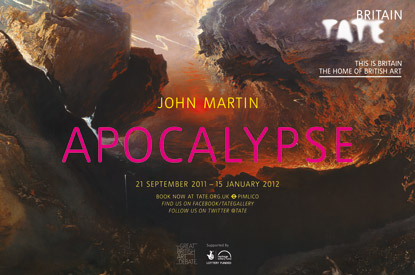
The main ingredient in these pictures is actually the spaces in them. Not so as you would notice, what with all the lightning, Biblical downfalls, spectral and colossal architecture, weather patterns seen on no terrestrial satellite, dwarfed human figures minutely picked out but hopelessly lost in the Sturm Und Drang of the righteously erupting geology all about.

What actually held my attention was the almost vertigo-inducing sense of cold, uninhabitable air between the viewpoint and always hopelessly distant action.

Monday, 9 January 2012

Foreground and Background


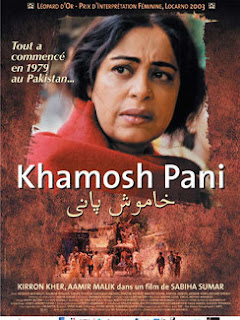
I only found out about "Khamosh Pani" (or "Silent Waters") through a colleague of Dr Roshini Kempadoo's, who mentioned the film in passing, while talking about his PhD research into the memories of partition as expressed in those who lived through them, and the cultural artifacts informed by the traumatic end of British imperial rule in India and the newly constituted Pakistan in 1947.

It's a gloriously humane film, taking on explosive elements of political history but succeeding in keeping a local frame around the narrative, and our sympathies with the female characters from the town. It's no coincidence that while the male characters are very morally active and noisy, it is within Ayesha's story and gravity within the plot of the film, that the ethical questions are asked and dramatised.

It's never actually occurred to me that I should be careful in this blog not to give away the endings of films or books; or at least that I should post a 'spoiler alert' if I'm doing more than reviewing- which is what I have been assuming I was doing most of the time.

One of the elements within 'Silent Water' that keeps the political and religious posturing, and our own reactions to it, from overwhelming the very understated story-line (Sikh brother returns to home town in Pakistan, half-aware that his sister might have escaped the filicidal and uxoricidal end of his family when the town was annexed by newly arrived Muslims), is the very pungent and textual attention to local domestic detail, fingers wiping rice and chapati from plates, Ayesha's careful sifting of grain in a large dish whenever she is thinking events over, the sympathetic street-shots, and the un-dressy interiors of bed, mat, picture and bowl.

This, and some of the same gender economy, is what links a small town near Rawalpindi in Pakistan with Incheon, the port and airport satellite city of Seoul in South Korea, where "고야이를 부탁해" (or "Look After My Cat") is set. Here too, the domestic interiors, cafes, tube-line landscapes are left to speak for themselves for long intervals, in a movie whose 3 main characters are girls in their first year out of high school, variously finding the route into womanhood an uncertain one. The urban and sub-urban journey-ings of the characters through the film take a good part of the place of dialogue between them, giving the film a rather beautiful and elliptical rhythm.

The unforgiving economics of a rapidly post-industrializing South Korea are dramatised quietly in the responses of Tae Hee, Hae Joo abd Ji Young to the sudden gulfs between them once school is over, (By far the noisiest and liveliest moment of the film is the first one, in which the girls wildly celebrate then end of their final school day, on the docks at Incheon with a camera), just as the equally relentless politico-religious logic of the re-formation of Pakistan's identity becomes the fuel for the drama of 'Silent Water'.
Monday, 26 December 2011

Talking Heads


Helvetica suffers when seen soon before Urbanized, because of the distractions of sets in an endless parade of selfconsciously designed offices (of typeface and graphic designers), and the ever-present risk of nerdish obsessing over micro-detail. It's most successful interviewees are Erik Spiekermann, whose spiky and arch asides mark him out from the faintly childish miasma surrounding most of the designers (Paula Scher ludicrously attempts to align a comfily boho 60s New York cultural touchstone with opposition to the war in Iraq; David Carson talks like a shambolic surfer) and the relaxed yet rigorous commentaries of Dimitri Bruni and Manuel Krebs. They are the only interviewees who actually reach the point of saying what a few others hint at or do not have the language to say: You can only say what your typeface will let you say, or wants to say.

Urbanized repeats the structure of Hustwit's earlier film (talking head followed by scene-establishing or atmosphere-generating still camera shot) but draws its commentary from a much wider population, and never quite drifts into picture-postcardisms for it's cinematography. The sequence shot from the front of an over-ground train on a weekday in central Detroit, clearly and shockingly empty of people is as arresting as 'Day of the Triffids'. Each section (Bombay, Detroit, Stuttgart, Phoenix, Cape Town, Bogota) is a little too self-contained, and the final thought (city as an idea) might just as well have been a starting point (though for a very different documentary).

Sunday, 27 November 2011

Table Manners

Sometimes concerts take some time to actually settle in your head, as if there's about 90 minutes of your life one evening missing, simply un-processable, un-critiqueable.

Simon and I bumped into the force-of-nature that is Carla Bozulich outside Cafe Oto after the show, and in our role as gushing fanboys, gave BAFTA-worthy performances. I think I actually said "we've had our musical hard-drives thoroughly cleaned and de-fragmented", and with a straight face too.

We had seen Evangelista turn in a performance that managed to be at once extremely casual, with moments of what might in other circumstances have been tiresome nerdiness and cutesy shambledom (which song to play next, is the bass in tune, etc), suddenly ghosting into phases of restless, frosty testifying, and thence erupting into chilling gouts of certainty and focus ("... and the wind knows my name!") before collapsing like a knackered leopard.

This would have been merely exceptionally arresting if Bozulich hadn't performed a couple of the verses of her encore kneeling on top of our table, having kicked the objects on it all over the place to position herself, for all the world as if she'd have been happier there all along.

Wednesday, 16 November 2011

Young People Nowadays


These are two gloriously cinematic films, which certainly wouldn't have justice done to them on a television screen. Andrea Arnold puts an astonishing weather-beaten array of natural greens, greys and russets into the frame, and even squares off the frame itself to heighten the sense of claustrophobia and to avoid opening up the film to an easily-delivered vista-of-nature. Her camera follows Heathcliff from beating to hillside to stable, punctuating the barely-imaginable journey Arnold charts for him, from act of charity, to dark obverse, to return of the repressed, with sudden, harsh, raw panoramas.

It was a crying shame that a gruesome pluck-fest of a track by Mumford and Sons was allowed to spray itself over the final few frames and reduce my memory of parts of the film to nothing better than an impressionistic folk music video styled by Toast's Moorland Farm aesthetic.

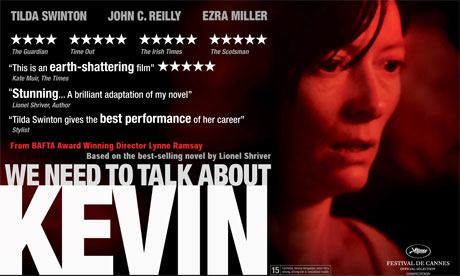
Lynne Ramsay (maker of the gloriously drifting film of Alan Warner's novel Morvern Callar) seems to get a lot more value out of her punctuations of curtains, diffused light, passers-by seen from cars, spacious-yet-ugly interiors. As far as I know, Tilda Swinton has never given a bad performance in a movie, and here she’s given more than enough time to put the viewer through the wringer with some desperately effortful mothering and blank, exhausted stares.

Tuesday, 15 November 2011

Life and Death


To my eyes, these are both films about the very thin line between life and death.

In Romero's gloriously low-budget, brutally trimmed schlocker, there's no explanation of the source of the Zombie manifestation. Soldiers (ignorant, coarse, desperate) and scientists (flaky, egg-headed, nerdy) are trapped underground, harvesting Zombies occasionally from the surface for the boffins to experiment on, and fruitlessly speculate over. At one point, one of the Zombies, called "Bud", is essentially being trained to be human again, as if death, or un-death, is nothing worse than a very severe case of amnesiac learning difficulty.

The survivors at the desert-island finale, in terms of representing that which in living humanity might be worth sparing a munching (and Romero certainly threw a good proportion of his dollars at the fake-flesh and blood FX department), are a white female scientist, who alone has managed to engage with the slouchingly violent and sniggering soldiery, a black philosophizing Caribbean helicopter pilot, and an alcoholic Irish radio operator. The ethnic and sexual economy of all this is pretty two-dimensional, but Romero should get some credit for a radical re-scaling of human value.

Conversely, in the Ring, the abrupt and terrorised deaths of a variety of young Japanese are found to be the result of a century-and-a-half old curse visited by the daughter of an unjustly persecuted female psychic. The moral economics are similar but on the other side of the life/death divide. The long-dead "mad" woman (or scientist, as she might have been seen in the mid nineteenth century) holds the ethical burden of an un-avenged, un-remarked death (the suicide of her mother). I don't have the cultural focus to interpret the precisely Japanese significance of the mother's suicide on the daughter; however the character able to reach across the life/death border here is a dead young woman, trying to drag others back across with her.

In Romero, it is the Zombie "Bud", in shooting the deranged soldier, who travels in the opposite direction, trying to follow the human escapees.


Thursday, 10 November 2011

Post-Industrial Graceland


Sean and I went to Birmingham in search of noise recently. We found it initially in the caustic hum of City Centre area kebab-joint fridges, and the very loud night-club attire of the Black Country's teens in search of joy at the various Vudus, Rages, Wasteds that litter the mainstream club map of the Digbeth- Bullring borders.

The Supersonic festival is set in a cluster of partially-reclaimed old warehouse and manufacturing buildings, under a vast redbrick railway arch. The vibe was almost embarrassingly relaxed and cheery, given the preponderance of devilry and gothdom on the t-shirts of our fellow noiseniks.

Essentially the discovery that the Capsule ladies have made is that Doom Metal is a folk music form and should be approached with the same taste for simplicity, repetition and and the re-telling of barely-acceptable stories below the mainstream media radar.

So we were treated to Wolves in the Throne Room purveying icy monolithic dirges, Orthodox taking the Latin liturgy and subjecting it to a statuesque and purposeful pummelling, and Electric Wizard essaying some old skool flourishes and some headbanging stylings straight out of the NWOBHM.

Pekko Kappi played a primitive Finnish 2-stringed wooden block, wailing to wonderful effect and introducing every second song as "another prison song"; the Secret Chiefs 3 staged a blinding hour and a half of hectic Balkan rocked-up prog-folk; Cloaks managed to siphon all the naff Funkyisms out of dubstep and slow the results right down; Mike Watt's gurning, restless and chafing 'opera' was compelling, and the gorgeously retro Warp electronica of Modulate showed just how great it can be to watch a bunch of 40somethings stare at their laptops and tone generators.

ATP's gonna have to step up to beat this.